
U.S. Tariffs: Your Money, India’s Edge – An Investor’s Note
Decoding American Tariffs: Implications and Opportunities for Indian Markets. Let's analyze the U.S.’s 26% tariffs on Indian imports as of April 2025 from an Indian investor’s perspective.
Mohit Verma
4/4/20254 min read
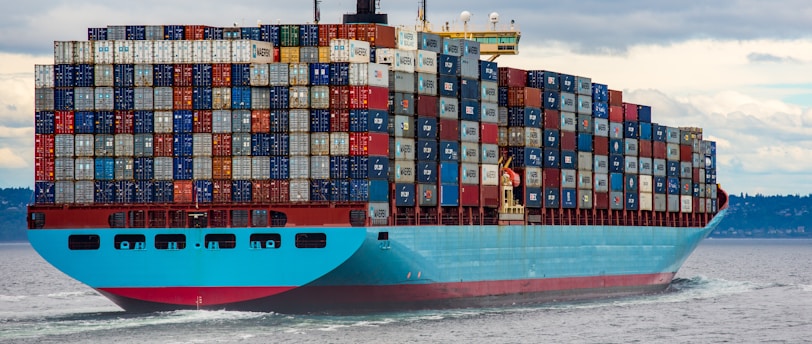
Tariffs come and go—each wave stirring markets, reshaping trade flows, and testing economic resilience. The recent U.S. tariffs, pegged at 26% on Indian imports as of April 2025, have sparked heated debates. Yet, tariffs are hardly a new phenomenon. Every country, including India, has used them to protect domestic industries, balance trade, or flex geopolitical muscle. What’s unique this time is the scale, intent, and timing of America’s move—and its ripple effects on India’s markets and economy. Let’s unpack this complex scenario and explore how India can turn chaos into opportunity.
The U.S.’s Unsustainable Tariff Gambit
The U.S.’s latest reciprocal tariffs—calculated uniquely based on trade deficits and import volumes—are a bold attempt to claw back manufacturing and address imbalances. But here’s the catch: in today’s interconnected world, no nation is an autarkic island. The global supply chain is a intricate web, with the U.S. historically excelling in high-end production and R&D while outsourcing labor-intensive manufacturing to countries like China, Vietnam, India etc. This division of labor has kept costs low and profits high for American firms. For the U.S., high tariffs are a double-edged sword. They may boost domestic production in theory, but they also fuel inflation. Imported goods—everything from raw materials to consumer products—get pricier, pushing up costs across the board. Higher inflation forces the Federal Reserve to keep interest rates elevated, swelling the U.S. government’s debt-servicing burden, which means a weaker U.S. dollar, subsequently capital flow back to emerging markets like India is expected. This isn’t conjecture—history shows tariffs often backfire when supply chains are too entrenched to shift quickly. The United States imposed high tariffs before the Great Depression, most notably with the Smoot-Hawley Tariff Act of 1930, this legislation raised U.S. tariffs on over 20,000 imported goods to record levels, with an average duty of about 40-48% on dutiable imports. It was one of the most protectionist tariff policies in U.S. history. The intent was to protect American farmers and industries by making foreign goods more expensive, boosting domestic production. However, it backfired. Other countries retaliated with their own tariffs, slashing U.S. exports by nearly 67% within a few years. Global trade collapsed—from $36 billion in 1929 to $12 billion by 1932—deepening the economic downturn worldwide. Economists still debate its exact role, but many agree Smoot-Hawley worsened the Depression by choking trade when recovery needed it most. This is a cautionary tale I keep in mind when looking at today’s tariff moves. History doesn’t repeat exactly, but it rhymes—supply chains were simpler then, yet the fallout was brutal. Today’s complexity could amplify the stakes.
Moreover, building factories from scratch takes years—plant construction, equipment installation, and scaling to full production could stretch 3-5 years or more. In addition, compare the cost of labor: U.S. manufacturing wages hover around $35 per hour, while China’s are $5 and India’s a mere $1.5. High per-capita income nations like the U.S. simply can’t compete with this cost advantage overnight. Investors, sensing this uncertainty, are in a bind—should they pour billions into U.S to setup factories, or adopt a wait-and-watch approach? The hesitation is palpable, and it’s already rattling global markets.
India’s Sweet Spot Amid Global Retaliation
While countries like China (facing 54% tariffs), Vietnam (46%), and even allies like Canada and Mexico (25%) threaten retaliation, India finds itself in a rare position. U.S. Treasury Secretary recently hinted at “advanced-level discussions” for a Free Trade Agreement (FTA) with India—a signal that U.S sees India as a strategic partner, not a foe. Unlike China, Mexico or Vietnam, India’s tariffs on U.S. goods, though high, come with a trade surplus that’s manageable ($35.31 billion in FY24). This gives India leverage to negotiate rather than retaliate. To sweeten the deal, India can shrink its trade surplus with the U.S. by buying more American oil and defense equipment—sectors where the U.S. excels.
Let us look at tariffs in relative terms: India’s 26% hit is mild compared to China’s 54% or Vietnam’s 46%. Indian goods—textiles, pharmaceuticals, electronics—suddenly gain a competitive edge in the U.S. market over pricier rivals. India’s cordial ties with the U.S., EU, UK, and Middle East further amplify this advantage. With FTA talks underway with the EU, UK, and nations like the UAE, India can diversify its export markets, reducing reliance on any single player. This chaos is our chance to boost our share in global trade.
The government’s “Make in India” push aligns perfectly with this shift. India has long been America’s trusted service provider—our software engineers and IT companies power U.S. tech giants. But why stop there? With Chinese hardware facing steep tariffs, this is India’s moment to pivot. Imagine Indian-made semiconductors, auto components, or machinery replacing Chinese imports in the U.S. supply chain. It’s not far-fetched—India’s electronics exports to the U.S has seen a significant growth. Scaling up hardware production could trigger a capex boom, attracting more foreign direct investment (FDI) and creating millions of new jobs.
Amid this optimism, a shadow looms—Chinese dumping. With U.S. markets less accessible, China may flood India with cheap goods, undercutting local firms. Fortunately, the Indian government has been proactive, imposing anti-dumping duties and restricting Chinese companies’ access to our markets. In 2024 alone, curbs on Chinese FDI and tech firms tightened—safeguards that give Indian manufacturers breathing room to scale up and compete.
The Bottom Line
America’s tariff experiment is bold but unsustainable—global supply chains won’t bend easily, and the U.S. risks inflation and isolation. For India, it’s a golden window. By leveraging our service credibility, negotiating FTAs, and scaling hardware production, we can boost exports, FDI, and jobs. The Chinese dumping threat is real, but manageable with vigilance. As an investor, I see short-term volatility giving way to a structural uptrend—India’s markets and economy are poised to shine in this new trade order. The key? Seize the moment, not just survive it!
For queries and support
© 2024. All rights reserved.

Mutual Funds are subject to market risks, please read the scheme related documents carefully